
Popular Products


Ajwa Dates
At DryFruits.AE, we take pride in offering the finest Ajwa dates, cherished for their exquisite taste, rich history, and unparalleled health benefits. Ajwa dates, known as the "King of Dates," hold a special place in Islamic tradition and are revered for their numerous nutritional...
- From Dhs. 20.00
Dhs. 23.00- From Dhs. 20.00
- Unit price
- / per


Almond Jumbo (Organic USA)
When it comes to almonds, there's a variety that stands out for its impressive size and delectable flavor—Almond Jumbo. These oversized almonds offer a unique sensory experience with their generous size and rich taste. In this article, we'll delve into the world of Almond...
- From Dhs. 24.00
Dhs. 28.00- From Dhs. 24.00
- Unit price
- / per


Pistachio Nuts Medium
The pistachio tree, which belongs to the cashew family, is a tiny tree that is native to Afghanistan and Central Asia. Many people eat the seeds that the tree produces. Pistacia vera is frequently mistaken for other Pistacia species that are also referred to...
- From Dhs. 20.00
Dhs. 23.00- From Dhs. 20.00
- Unit price
- / per


Sale
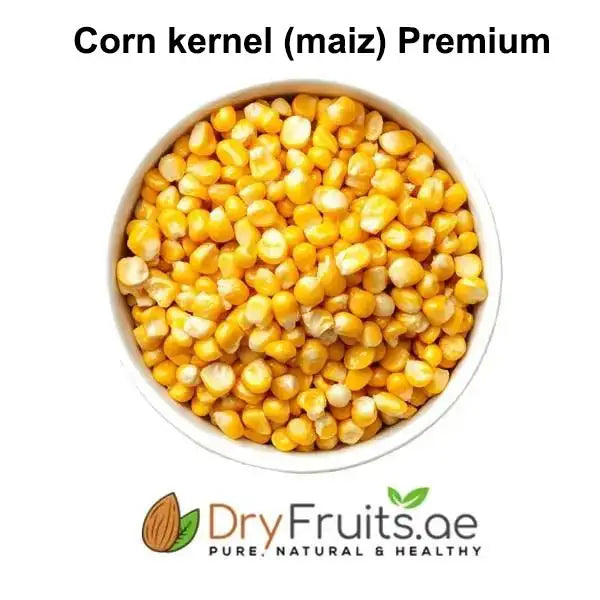
Corn Kernel (Miaz) premium
2
sold in last
8
hours
Shop Corn Kernel (Miaz / مياز) in Dubai, Abu Dhabi, Sharjah, Ajman, UAE Cash on Delivery available for Dubai and Sharjah. Corn kernels — those small, hard, golden-yellow dried maize seeds that look completely ordinary sitting in a bag but turn into something entirely different the moment heat hits them. Known across the Arab world and South Asia as Miaz,...
- Dhs. 9.00
Dhs. 15.00- Dhs. 9.00
- Unit price
- / per
Please hurry! Only 100 left in stock
10 customers are viewing this product
Free Shipping
Free standard shipping on orders over 150 AED
Estimated to be delivered on Same Day or Next Day.
Free Returns
Learn More.
100% Return & Exchange
- Customers have up to 48 hour to ask for a Return or Exchange.
- All Products should be in its original Condition and are subject to approval by our Return/Exchange team.
- Items should be complete in Quantity/Weight.
- In case of Exchange Delivery Charges will be paid by the Customer.
- Delivery Charges are not Refundable.
- All Amount will be refunded to its original payment method, and may take 7-14 Days.
Delivery all of over the UAE 2-3 Days
Lorem ipsum dolor sit amet, consectetur adipiscing elit, sed do eiusmod tempor incididunt ut labore et dolore magna aliqua. Ut enim ad minim veniam, quis nostrud exercitation ullamco laboris nisi ut aliquip ex ea commodo consequat. Duis aute irure dolor in reprehenderit in voluptate velit esse cillum dolore eu fugiat nulla pariatur. Excepteur sint occaecat cupidatat non proident, sunt in culpa qui officia deserunt mollit anim id est laborum.

Shop Corn Kernel (Miaz / مياز) in Dubai, Abu Dhabi, Sharjah, Ajman, UAE
Cash on Delivery available for Dubai and Sharjah.
Corn kernels — those small, hard, golden-yellow dried maize seeds that look completely ordinary sitting in a bag but turn into something entirely different the moment heat hits them. Known across the Arab world and South Asia as Miaz, and called dried maize or field corn in broader markets. Most people buy it for one of three reasons — popping into popcorn at home, grinding into cornmeal for cooking, or feeding animals and birds. The texture is rock hard when dry, the colour deep golden to pale yellow, and the smell is faintly sweet and starchy — distinctly grain-like. Once popped or cooked, the flavour opens up into that familiar warm, nutty, sweet corn taste that needs nothing beyond a little salt to be satisfying. A staple pantry ingredient found across UAE households — South Asian, Arab, African, and Western — each using it differently but valuing it equally.
Why Corn Kernels Are a Kitchen and Wellness Staple
Corn, or Zea mays, is one of the oldest and most widely cultivated crops in human history — originating in Mesoamerica over 9,000 years ago and now grown on every inhabited continent. Dried corn kernels are the most shelf-stable form of this grain, allowing storage for months without refrigeration while retaining full nutritional value. Used across civilisations — from Native American traditions to African staple cooking to South Asian home kitchens — dried corn has fed populations, fuelled trade routes, and formed the base of countless traditional food systems. In the UAE and wider Gulf region, dried corn kernels are a familiar household item — used for homemade popcorn, boiled as a snack, ground for flatbreads, or sprouted for wellness purposes. Rich in complex carbohydrates, fibre, and naturally occurring antioxidants like lutein and zeaxanthin — important for eye health. The dried kernel form concentrates these nutrients compared to fresh sweet corn, making it a genuinely nutritious pantry staple beyond just its role as a snacking ingredient.
What Good Corn Kernels Look Like
Quality dried corn kernels should be uniformly golden-yellow to deep amber — not pale, grey, or discoloured. Should be hard and completely dry — any softness indicates moisture absorption and possible mold risk. Should smell faintly sweet and clean — a stale, musty, or rancid smell is a clear sign of old or improperly stored stock. Kernels should be relatively uniform in size — oversized, shrivelled, or mixed sizes often indicate poor sorting. When used for popcorn, quality kernels should pop completely with minimal unpopped kernels remaining at the bottom — a high number of hard unpopped kernels indicates old or over-dried stock that has lost the internal moisture needed for popping. No visible mold, insect damage, or dark spots. Clean, consistent, and dry — simple markers but the most reliable ones.
What You're Getting
- Authentic Dried Corn Kernels: Premium quality whole maize kernels
- Golden Colour: Properly dried, well-sorted — not pale or discoloured
- Multi-Purpose: Suitable for popping, boiling, grinding, or sprouting
- Consistent Size: Evenly sorted kernels for reliable popping performance
- Natural & Pure: No additives, coatings, salt, or flavouring
- 200gm Pack: Convenient everyday size for home use
Health Benefits of Corn Kernels
Whole grain nutrition with multiple traditional and research-backed uses:
- Complex Carbohydrates — Steady, slow-releasing energy — better than refined grain alternatives
- High Fibre — Supports healthy digestion, regular bowel movement, and gut health
- Eye Health — Naturally rich in lutein and zeaxanthin — antioxidants linked to protecting vision
- Antioxidant Rich — Contains ferulic acid and carotenoids with cell-protective properties
- Gluten Free — Naturally gluten-free grain — suitable for those with gluten sensitivity or coeliac disease
- Heart Support — Fibre content linked to healthy cholesterol management
- Blood Sugar Balance — Whole grain corn has a lower glycaemic impact than refined corn products
- B Vitamins — Source of thiamine, niacin, and folate important for energy and cell function
- Weight Management — High fibre and complex carb content supports satiety
Corn Kernel Nutrition Facts — Per 100g (Dried)
| Nutrition | How Much |
|---|---|
| Calories | ~365 kcal |
| Protein | 9.4 g |
| Fat | 4.7 g |
| Carbohydrates | 74.0 g |
| Fiber | 7.3 g |
| Natural Sugars | 0.6 g |
| Iron | 2.7 mg |
| Potassium | 287 mg |
| Vitamin B3 (Niacin) | 3.6 mg |
(Values are estimates based on dried whole maize kernels)
How to Use Corn Kernels
- Heat a deep pan with a lid, add a tablespoon of oil and a handful of kernels — homemade popcorn in minutes
- Soak overnight in water then boil for 30–40 minutes for soft, chewy boiled corn kernels as a snack
- Grind into coarse cornmeal for making flatbreads, porridge, or traditional corn dishes
- Sprout by soaking in water for 2–3 days, rinse daily — add sprouted kernels to salads and stir-fries
- Dry roast in a pan without oil for a crunchy, nutty corn snack
- Simmer in soups and stews for texture and bulk
- Use as bird and animal feed — a practical multipurpose grain
Golden, simple, endlessly useful. Corn Kernels in Dubai — the grain that pops, feeds, and nourishes.
Questions About Corn Kernels
1. Can I use these corn kernels to make popcorn at home?
Yes, dried corn kernels are exactly what homemade popcorn is made from. Heat a wide, deep pan over medium-high heat with a tablespoon of neutral cooking oil — sunflower or vegetable oil works best. Add a single layer of kernels, put the lid on, and wait. Within 2–3 minutes you will hear the first pop, then a rapid burst of popping activity. Shake the pan occasionally to prevent burning. Once the popping slows to several seconds between pops, remove from heat. Season immediately with salt, butter, or whatever flavouring you prefer. Simple, cost-effective, and far fresher than pre-packaged microwave popcorn.
2. Why do some kernels not pop?
Unpopped kernels — known as old maids — happen for two main reasons. First, the kernel has lost too much internal moisture through age or improper storage — popcorn pops because the water inside the kernel turns to steam and builds pressure, so kernels that are too dry simply can't generate enough pressure. Second, the heat may be too low, causing kernels to dehydrate further rather than build pressure rapidly. For best popping results, store kernels in an airtight container to preserve internal moisture and use medium-high heat with good oil coverage in the pan.
3. What is the difference between popcorn corn and regular field corn?
Not all corn varieties pop equally. True popcorn varieties (Zea mays everta) have a thicker, harder hull and the right moisture content inside to generate sufficient steam pressure for a clean pop. Regular field corn — used for animal feed, grinding, or boiling — has a thinner hull and different starch composition, meaning it either pops poorly or not at all. Miaz kernels sold for popcorn are typically the appropriate variety. If kernels consistently fail to pop, they may be a field corn variety better suited for boiling or grinding.
4. How do I boil corn kernels as a snack?
Soak dried kernels in plenty of cold water overnight — they need to rehydrate before cooking. Drain, then add to a pot of fresh water and bring to a boil. Simmer on medium heat for 30–45 minutes until the kernels are soft and chewy — they won't become as soft as canned sweet corn but should have a pleasant bite without being rock hard. Drain, season with salt, a squeeze of lemon, and a pinch of chaat masala or black salt for a popular South Asian street-snack style serving. Serve warm for best flavour.
5. Are corn kernels gluten free?
Yes, corn is naturally gluten free. Dried corn kernels in their pure, unprocessed form contain no wheat, barley, or rye — making them suitable for people with coeliac disease or gluten sensitivity. The important caveat is cross-contamination — if kernels are processed in a facility that also handles wheat or gluten-containing grains, trace contamination is possible. For those with severe gluten intolerance, always check the packaging for certified gluten-free labelling.
6. Can I grind corn kernels into flour at home?
Yes, with the right equipment. A powerful grain mill, high-speed blender, or heavy-duty food processor can grind dried corn kernels into cornmeal or corn flour depending on how fine you process them. Coarse grinding gives cornmeal suitable for polenta and porridge. Fine grinding gives a flour suitable for flatbreads and baking. A standard household blender may struggle with the hardness of dried kernels — a dedicated grain mill or at least a high-powered blender is recommended.
7. How do I sprout corn kernels?
Sprouting corn kernels adds nutritional value and makes them easier to digest. Soak kernels in clean water for 8–12 hours. Drain, rinse, and place in a clean jar or sprouting tray covered with a breathable cloth. Rinse and drain once or twice daily. Within 2–3 days, small white shoots will appear. Once the sprout is 1–2 cm long, they are ready to eat. Add to salads, lightly stir-fry, or eat raw. Sprouting activates enzymes and increases the bioavailability of vitamins — particularly B vitamins and vitamin C.
8. Are corn kernels suitable for birds and animals?
Yes, dried corn kernels are one of the most common and nutritious feeds for birds, chickens, and small farm animals. Pigeons, parakeets, hens, and many wild birds readily eat whole dried corn. For smaller birds, cracked or crushed corn is easier to manage than whole kernels. Chickens enjoy both pecking at whole kernels and eating cracked corn mixed into feed. It's a high-energy, easily stored feed grain that keeps well without refrigeration.
9. How long do dried corn kernels last?
Properly stored in an airtight container in a cool, dry place, dried corn kernels can last 1–2 years without significant loss of nutritional value. For popcorn purposes, longer storage does reduce popping performance as the kernels gradually lose their internal moisture content. For best popping results, use within 12 months. For boiling, grinding, or animal feed, shelf life extends further. Always check for any musty smell, visible mold, or insect activity before use — these are signs the kernels have been compromised by moisture or improper storage.
10. Can diabetics eat corn kernels?
Whole dried corn kernels have a lower glycaemic index than refined corn products like cornflour, corn syrup, or white corn tortillas, because the fibre and whole grain structure slow sugar absorption. In moderate portions, corn kernels are generally considered acceptable as part of a balanced diet for diabetics. However, they are still a carbohydrate-rich grain, so portion awareness is necessary. Boiled whole kernels are a better choice than popcorn with butter and salt or processed corn-based snacks for those managing blood sugar.
11. What is the local name Miaz and how is it used across the Gulf?
Miaz is the colloquial Arabic term for dried corn kernels used across parts of the Gulf, particularly in UAE, Oman, and neighbouring regions. It is most commonly associated with homemade popcorn in Gulf households — a simple, affordable snack prepared quickly on the stovetop. Beyond popcorn, it appears in traditional mixed grain feeds and occasionally in slow-cooked dishes. The name reflects a long cultural familiarity with corn as a practical, everyday household grain despite it not being native to the Arab world.
12. Where can I buy authentic dried corn kernels in Dubai?
South Asian grocery stores, traditional spice and grain shops, bird feed suppliers, and dry fruit and nut stores across Dubai and Sharjah commonly stock dried corn kernels. Quality varies — look for clean, uniformly golden, hard, dry kernels with a fresh, faintly sweet smell. Avoid bags with visible moisture, dark spots, or a stale odour. We deliver premium dried corn kernels across Dubai, Abu Dhabi, Sharjah, and Ajman with Cash on Delivery available.
Shipping & Delivery
Free Delivery All over UAE *
We Provide delivery in 24 - 48 Hours in Dubai, Sharjah, Ajman.
Abu Dhabi, Alain, Fujairah, Ras Al-Khaimah, Um-Al-Quwain are covered in 48 - 72 Hours.
* Your Delivery becomes free once you reach the minimum amount of the order.
Return Policy
100% Return & Exchange
- Customers have up to 48 hour to ask for a Return or Exchange.
- All Products should be in its original Condition and are subject to approval by our Return/Exchange team.
- Items should be complete in Quantity/Weight.
- In case of Exchange Delivery Charges will be paid by the Customer.
- Delivery Charges are not Refundable.
- All Amount will be refunded to its original payment method, and may take 7-14 Days.
Related Products
Example product title
- From Dhs. 9.00
Dhs. 15.00- From Dhs. 9.00
- Unit price
- / per
Example product title
- From Dhs. 9.00
Dhs. 15.00- From Dhs. 9.00
- Unit price
- / per
Example product title
- From Dhs. 9.00
Dhs. 15.00- From Dhs. 9.00
- Unit price
- / per
Example product title
- From Dhs. 9.00
Dhs. 15.00- From Dhs. 9.00
- Unit price
- / per
Example product title
- From Dhs. 9.00
Dhs. 15.00- From Dhs. 9.00
- Unit price
- / per
Example product title
- From Dhs. 9.00
Dhs. 15.00- From Dhs. 9.00
- Unit price
- / per
Recently Viewed Products
Example product title
- From Dhs. 9.00
Dhs. 15.00- From Dhs. 9.00
- Unit price
- / per
Example product title
- From Dhs. 9.00
Dhs. 15.00- From Dhs. 9.00
- Unit price
- / per
Example product title
- From Dhs. 9.00
Dhs. 15.00- From Dhs. 9.00
- Unit price
- / per
Example product title
- From Dhs. 9.00
Dhs. 15.00- From Dhs. 9.00
- Unit price
- / per
Example product title
- From Dhs. 9.00
Dhs. 15.00- From Dhs. 9.00
- Unit price
- / per
Example product title
- From Dhs. 9.00
Dhs. 15.00- From Dhs. 9.00
- Unit price
- / per
Example product title
- From Dhs. 9.00
Dhs. 15.00- From Dhs. 9.00
- Unit price
- / per
Example product title
- From Dhs. 9.00
Dhs. 15.00- From Dhs. 9.00
- Unit price
- / per
Example product title
- From Dhs. 9.00
Dhs. 15.00- From Dhs. 9.00
- Unit price
- / per
Example product title
- From Dhs. 9.00
Dhs. 15.00- From Dhs. 9.00
- Unit price
- / per
- Choosing a selection results in a full page refresh.