





- Choosing a selection results in a full page refresh.
Free standard shipping on orders over 150 AED
Estimated to be delivered on Same Day or Next Day.
100% Return & Exchange
Lorem ipsum dolor sit amet, consectetur adipiscing elit, sed do eiusmod tempor incididunt ut labore et dolore magna aliqua. Ut enim ad minim veniam, quis nostrud exercitation ullamco laboris nisi ut aliquip ex ea commodo consequat. Duis aute irure dolor in reprehenderit in voluptate velit esse cillum dolore eu fugiat nulla pariatur. Excepteur sint occaecat cupidatat non proident, sunt in culpa qui officia deserunt mollit anim id est laborum.
Cash on Delivery available for Dubai and Sharjah.
Black salt — that pungent, sulphurous rock salt that smells distinctly like boiled eggs but transforms ordinary dishes into something special the moment it's added. Also called Kala Namak, Himalayan black salt, or Sanchal, mined from volcanic salt deposits primarily in the Himalayan region and parts of India, Pakistan, and Nepal. Most people buy it for two reasons — Ayurvedic digestive support and that unmistakable savoury, egg-like flavour that makes it a favourite in vegan cooking for replicating egg taste. The colour is actually pinkish-grey to dark purple when ground into powder, not truly black despite the name. The smell is strong and sulphuric, but once mixed into food, it mellows into a deep, savoury, slightly smoky flavour unlike any regular table salt. Usually sprinkled over fruit, mixed into chaat, blended into spice mixes, or used in vegan recipes craving that eggy depth. Common across South Asian kitchens and increasingly popular in plant-based cooking worldwide.
Black salt comes from volcanic rock salt deposits, traditionally mined in the Himalayan foothills and regions across India, Pakistan, Bangladesh, and Nepal. Used for thousands of years in Ayurvedic medicine, where it is known as Kala Namak and considered one of the most therapeutic salts compared to regular table salt. Unlike processed white salt, black salt retains naturally occurring minerals and sulphur compounds during the traditional kiln-firing process used to produce it. That distinctive sulphur smell — often compared to boiled eggs — comes from these natural mineral compounds, particularly hydrogen sulphide and sodium sulphate. Traditionally used in Ayurveda for supporting digestion, reducing bloating, and balancing body heat. Considered a "cooling" salt in Ayurvedic tradition, often recommended over regular salt for those with digestive sensitivity. Widely used in Indian, Pakistani, and Nepali households as a daily table condiment, especially sprinkled over fruits, salads, and savoury snacks.
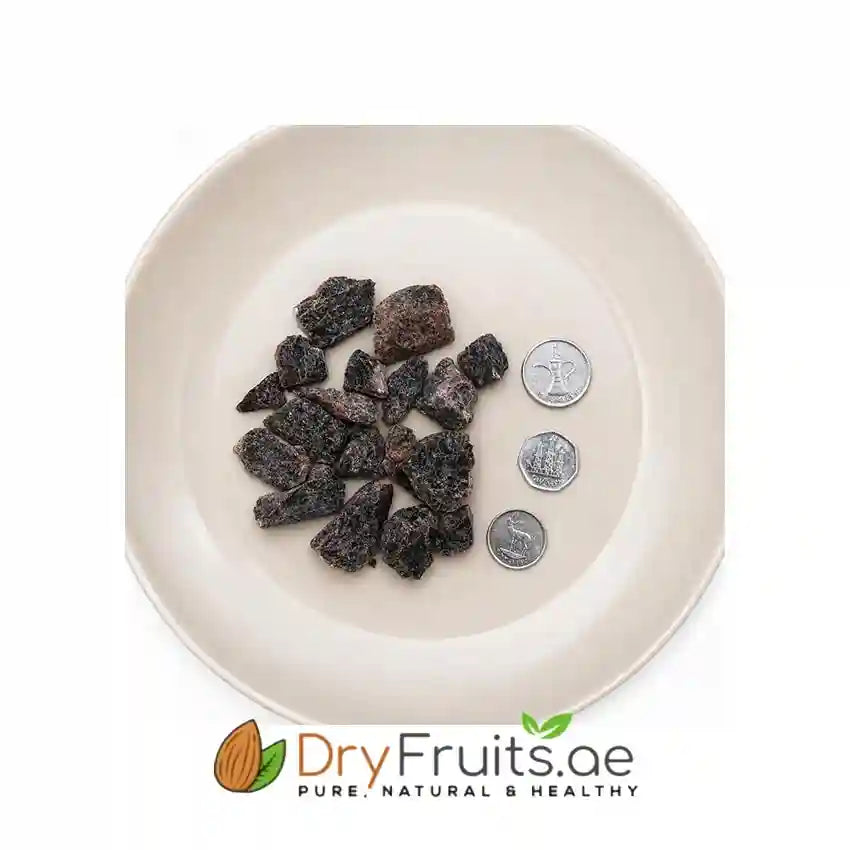
Quality black salt in crystal form should be dark purplish-brown to almost black, often translucent at the edges when held to light. In powdered form, it appears pale pinkish-grey — not bright white like regular table salt. Should have a strong, distinctly sulphuric smell — if it smells like ordinary salt with no aroma, it is likely fake or heavily diluted. Crystals should be hard and glass-like, not soft or crumbly. When dissolved in water, it should release that characteristic egg-like aroma clearly. Powder should flow freely, not clump excessively, though some natural clumping is normal due to mineral content. No artificial colouring — authentic black salt gets its tone naturally from the mineral and kiln-firing process, not dye.
Traditional and some research-backed uses:
| Nutrition | How Much |
|---|---|
| Calories | 0 kcal |
| Sodium | ~32,000 mg |
| Potassium | 1,500 mg |
| Iron | 4.0 mg |
| Sulphur Compounds | Present (natural) |
| Calcium | 50 mg |
(Used in small seasoning amounts — typically a pinch per dish. Nutritional values are estimates as it's a mineral salt, not a food)
Pungent, savoury, deeply traditional. Black Salt in Dubai — the secret behind authentic South Asian flavour.
1. Why does black salt smell like eggs?
The sulphuric smell comes from natural compounds, primarily hydrogen sulphide and other sulphur-based minerals, formed during the traditional kiln-firing process used to produce authentic Kala Namak. This is completely normal and is actually a strong sign of authenticity — fake or heavily processed versions often lack this distinct smell. Once mixed into food, the strong raw smell mellows significantly into a pleasant savoury, slightly eggy depth rather than an overpowering odour.
2. Is black salt healthier than regular table salt?
In some ways, yes. Black salt generally contains less sodium chloride per gram than refined table salt and retains natural trace minerals like iron and potassium that are stripped out during the refining process used for regular salt. Ayurveda considers it a "cooling" salt, often recommended for digestive sensitivity. However, it is still a salt — moderation is necessary regardless of type, especially for those monitoring blood pressure or sodium intake overall.
3. Can black salt help with bloating and gas?
Yes, this is one of its most common traditional uses. In Ayurvedic practice, a pinch of black salt mixed with warm water, lemon, or buttermilk after meals is a long-standing remedy for bloating, gas, and sluggish digestion. Many South Asian households keep it specifically for this purpose alongside its culinary use. It's not an instant fix for severe digestive issues, but as a regular dietary habit, many find it genuinely helpful.
4. How is black salt used to make vegan food taste eggy?
The natural sulphur compounds in black salt closely mimic the smell and flavour notes of eggs, making it a favourite ingredient in vegan and plant-based cooking. It's commonly used in tofu scrambles, chickpea flour omelettes, and vegan egg salad substitutes. A small pinch goes a long way — too much can overpower a dish with sulphuric intensity rather than a pleasant savoury note. Start small and adjust to taste.
5. Is black salt the same as Himalayan pink salt?
No, they are different products despite both originating from similar mountain regions. Himalayan pink salt is a milder rock salt, pink in colour, without the strong sulphuric smell, and used as a general table salt substitute. Black salt (Kala Namak) is specifically processed with sulphur compounds, has that distinct eggy aroma, and is used more for its unique flavour and Ayurvedic properties rather than as an everyday salt replacement.
6. Can people with high blood pressure use black salt?
Caution is still advised. While black salt has a somewhat lower sodium content than regular table salt, it is not sodium-free and should not be considered a free pass for those managing hypertension. It can be used as a partial substitute in moderation, but anyone with high blood pressure or on a low-sodium diet should consult their doctor before making it a primary seasoning and should track overall sodium intake regardless of salt type used.
7. How do I grind black salt crystals at home?
Black salt crystals are quite hard and glass-like, so a sturdy spice grinder, mortar and pestle, or dedicated salt grinder works best. Grind in small batches for an even, fine texture. Pre-ground black salt powder is widely available and more convenient for daily cooking, though whole crystals retain potency and aroma slightly longer. If using crystals occasionally, grind only what you need for that dish to preserve the rest.
8. Why does my black salt taste different from store to store?
Quality and authenticity vary significantly between suppliers. Genuine Kala Namak comes from specific volcanic salt deposits and undergoes traditional kiln processing — the resulting mineral content and sulphur intensity differ slightly by source region and processing method. Some cheaper versions are diluted with regular salt or use artificial sulphur flavouring, resulting in a weaker or oddly chemical taste. Authentic black salt should have a robust, natural sulphuric aroma without any harsh chemical undertone.
9. Can black salt be used in drinks?
Yes, very commonly. A pinch of black salt is a traditional addition to lassi, buttermilk (chaas), lemon water, and even some cocktails and mocktails for a savoury, tangy twist. It's also a popular ingredient in jal jeera, a traditional digestive drink. The salt cuts through richness and adds complexity that regular salt simply can't replicate.
10. Is black salt safe for daily use?
Yes, in normal culinary seasoning amounts, black salt is safe for daily use for most healthy adults. It's used as a regular table condiment across millions of South Asian households without issue. As with any salt, those on medically restricted sodium diets should monitor total intake and consult their doctor. For general cooking and seasoning purposes, it fits easily into a normal daily diet.
11. How should I store black salt?
Store in an airtight container in a cool, dry place, away from moisture. Black salt crystals are fairly stable and don't expire in the traditional sense, but humidity can cause clumping in powdered form. A glass jar with a tight lid works better than plastic for long-term freshness. Properly stored, both crystal and powder forms remain potent for years without losing their distinct aroma or flavour.
12. Where can I buy authentic black salt in Dubai?
Indian and Pakistani grocery stores, spice souks, Ayurvedic and herbal shops, and specialty South Asian supermarkets across Dubai and Sharjah all typically carry black salt. Quality varies — look for a strong, genuine sulphuric smell and natural pinkish-grey to dark crystal colour, avoiding overly white or odourless versions claiming to be black salt. We deliver authentic Kala Namak across Dubai, Abu Dhabi, Sharjah, and Ajman with Cash on Delivery available.
Free Delivery All over UAE *
We Provide delivery in 24 - 48 Hours in Dubai, Sharjah, Ajman.
Abu Dhabi, Alain, Fujairah, Ras Al-Khaimah, Um-Al-Quwain are covered in 48 - 72 Hours.
* Your Delivery becomes free once you reach the minimum amount of the order.
100% Return & Exchange
Thanks for subscribing!
This email has been registered!
| Product | SKU | Description | Collection | Availability | Product Type | Other Details |
|---|